Hyderabad Future City: Telangana’s Vision for India’s Next Global Smart City
Hyderabad has already transformed from a historical city into one of India’s leading technology and business hubs. After the success of Hyderabad, Secunderabad, and Cyberabad, the Government of Telangana is now building its next growth engine — Hyderabad Future City, also known as Bharat Future City.
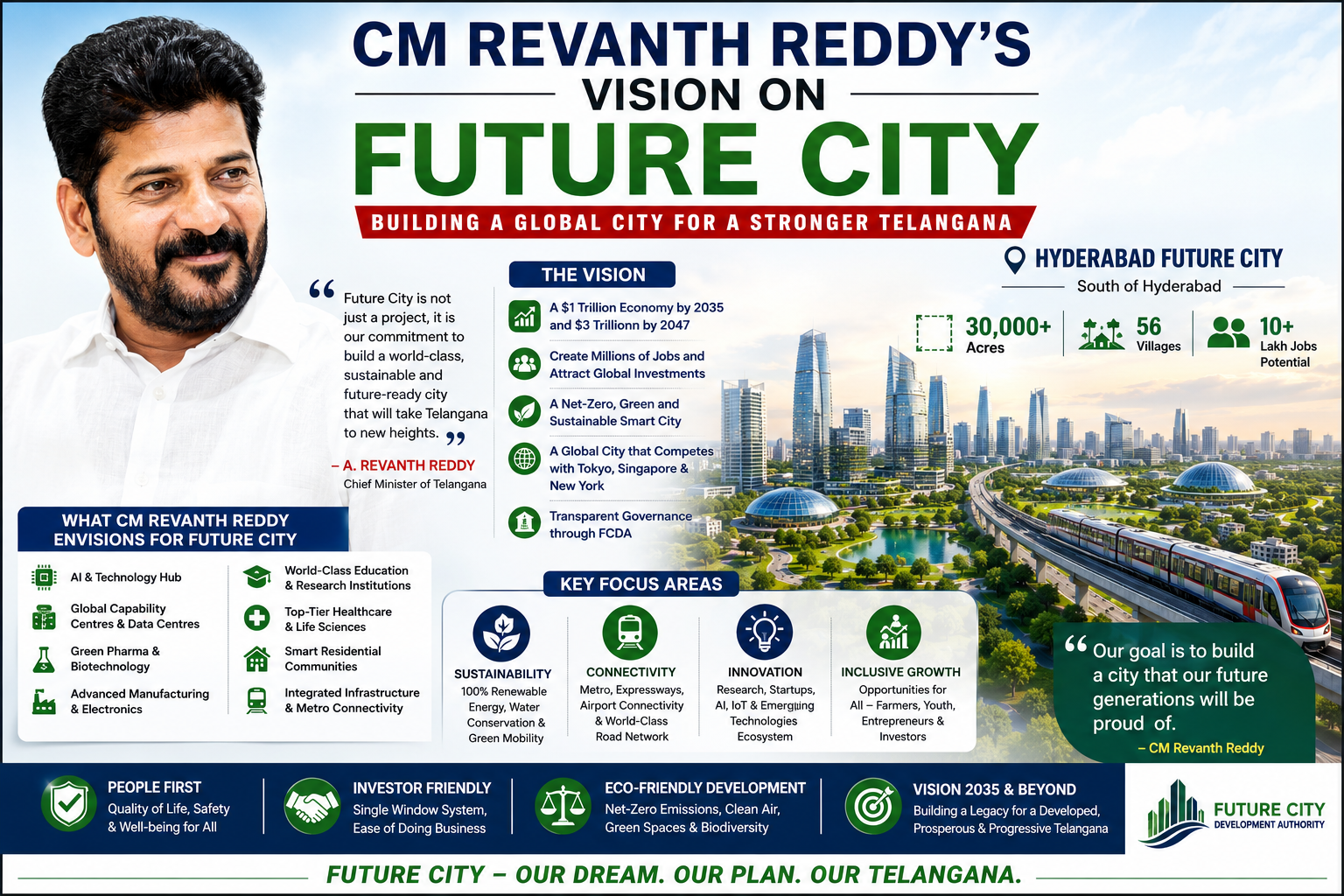
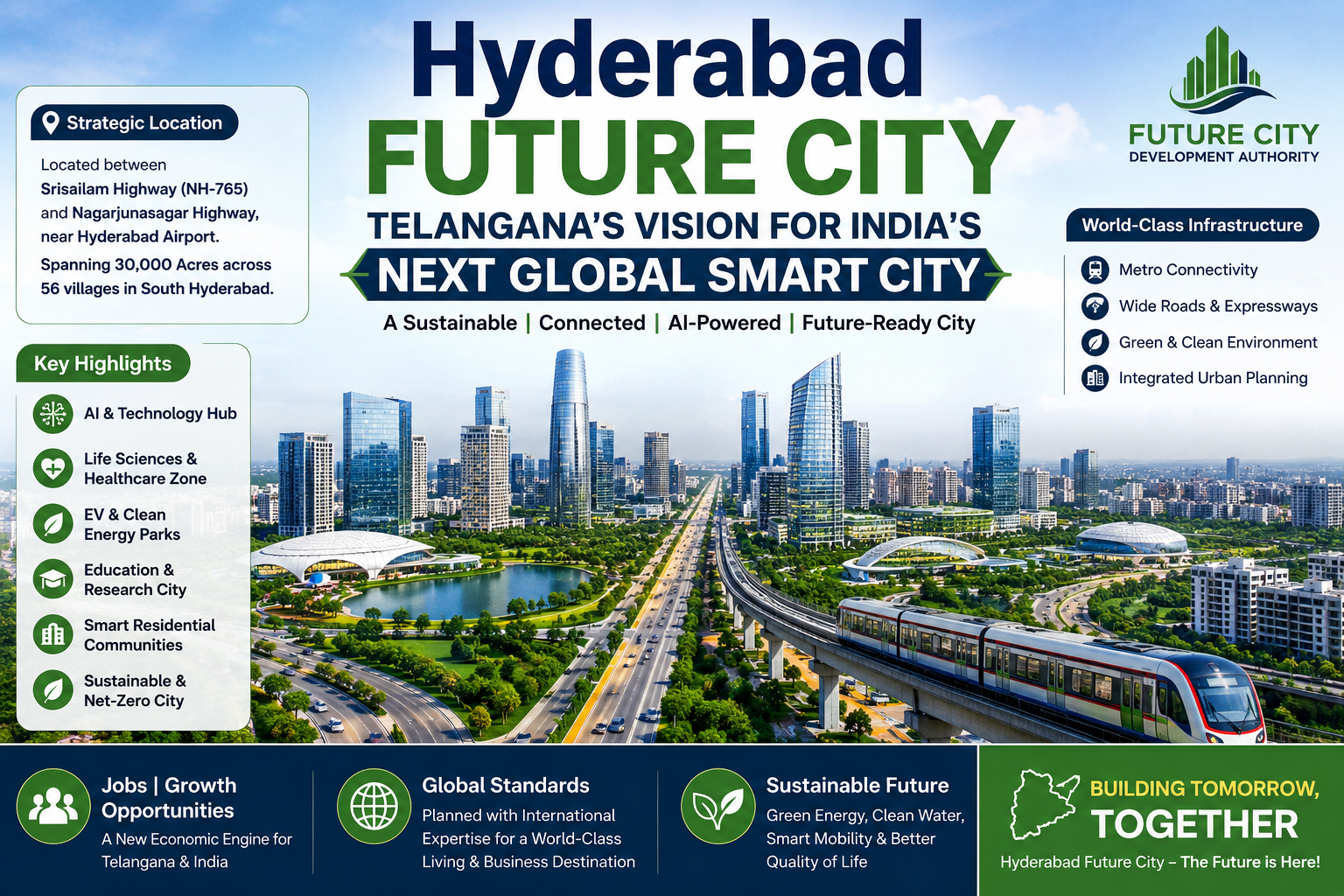
Spread across approximately 30,000 acres in South Hyderabad, this mega project aims to become India’s first large-scale net-zero smart city focused on Artificial Intelligence, advanced manufacturing, clean energy, education, healthcare, and world-class urban infrastructure.
Strategic Location
Future City is being developed between the Srisailam Highway (NH-765) and Nagarjunasagar Highway, south of Hyderabad’s international airport. The project covers parts of several rapidly developing mandals including Kandukur, Maheshwaram, Yacharam, Kadthal, Manchal, Ibrahimpatnam, and Amangal. The broader planning region spans around 765 square kilometres covering 56 villages.
Future City Development Authority (FCDA)
To ensure planned development, the Telangana Government created the Future City Development Authority (FCDA) as a dedicated statutory body to manage infrastructure, zoning, approvals, and urban planning for the entire region. The FCDA headquarters was inaugurated in June 2026, marking the official beginning of large-scale implementation.
Key Features of Hyderabad Future City
1. Artificial Intelligence and Technology Hub
Future City is being planned as an AI-ready urban ecosystem with dedicated zones for artificial intelligence companies, research institutions, data centres, and technology startups.
2. Life Sciences and Healthcare Zone
Hyderabad is already known as India’s vaccine and pharmaceutical capital. Future City plans to expand this leadership through biotechnology parks, research centres, and advanced healthcare infrastructure.
3. EV and Clean Energy Parks
Dedicated clusters for electric vehicle manufacturing, battery technology, renewable energy, and green industries are part of the master plan.
4. Education and Research City
International universities, skill development centres, research institutions, and innovation campuses are expected to become major components of the project.
5. Smart Residential Communities
The city aims to provide integrated townships with modern amenities, public transport, parks, healthcare facilities, and digital infrastructure.
6. Sustainable Urban Development
The project is envisioned as a net-zero greenfield city with emphasis on renewable energy, water conservation, public transportation, and environmentally sustainable development.
Connectivity and Infrastructure
The Telangana Government is planning extensive connectivity improvements including:
- Expansion of road infrastructure connecting the project to Outer Ring Road and Regional Ring Road.
- Proposed metro connectivity between Hyderabad International Airport and Future City.
- Dedicated logistics and industrial corridors.
- Integration with Hyderabad’s growing transportation network.
International Expertise
The government selected Singapore-based architectural and urban planning firm DP Architects to prepare the comprehensive master plan for Future City. The firm is expected to design the city with global standards in urban planning and sustainability.
Investment Potential
Future City has attracted enormous interest from investors, developers, and home buyers due to:
- Large land availability.
- Government-backed infrastructure development.
- Proximity to Hyderabad International Airport.
- Planned metro connectivity.
- Industrial and employment opportunities.
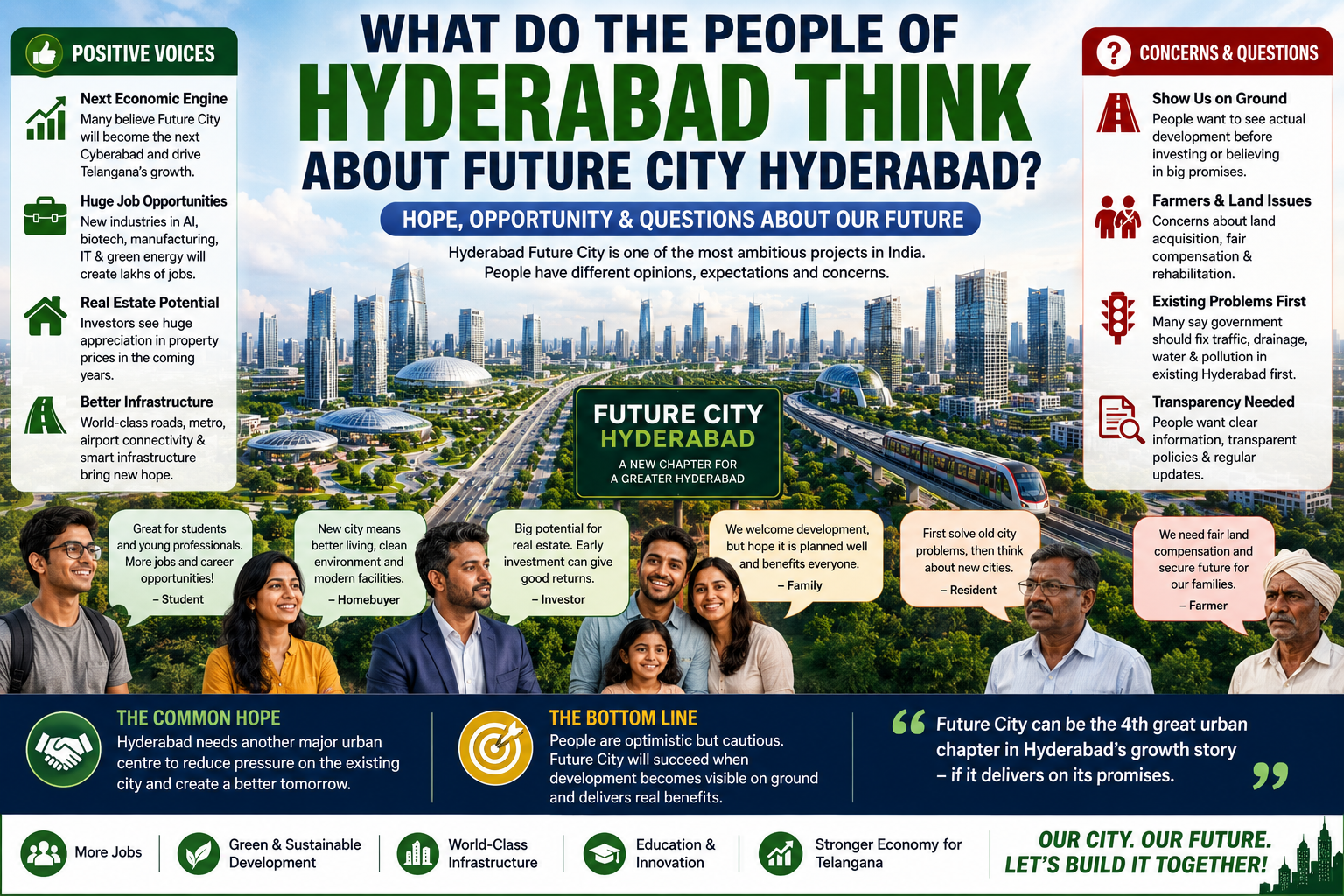
However, investors should remember that many areas remain in the planning and early development stage. Infrastructure execution timelines and actual ground development will ultimately determine long-term returns. Investors should verify land titles, zoning regulations, approvals, and legal status before purchasing any property.
Challenges Ahead
Like every mega urban project, Future City also faces challenges:
- Land acquisition and rehabilitation.
- Environmental sustainability.
- Infrastructure execution timelines.
- Managing speculative land prices.
- Maintaining transparent urban governance.
Conclusion
Hyderabad Future City represents one of India’s most ambitious urban development projects. If executed successfully, it has the potential to become a global hub for technology, innovation, manufacturing, education, and sustainable living.
For Hyderabad and Telangana, Future City could become what Cyberabad became in the early 2000s — a new economic engine that shapes the region’s growth for decades to come.